The trip to the Amazon begins
The trip to the Amazon is like no other. The moment you step off the plane, the humidity and the heat put you straight into the mood. The gateway to the Amazon is Leticia. A small open-air market, boats, and smiling faces. Crowds, chats with the locals, a few supplies and one last touch of “civilisation”. As soon as we get into the boat, nature sets the stage. Birds, trees and green everywhere, monkeys and parrots. With Altervan we don’t just “look at” all this. We take part and we live it.
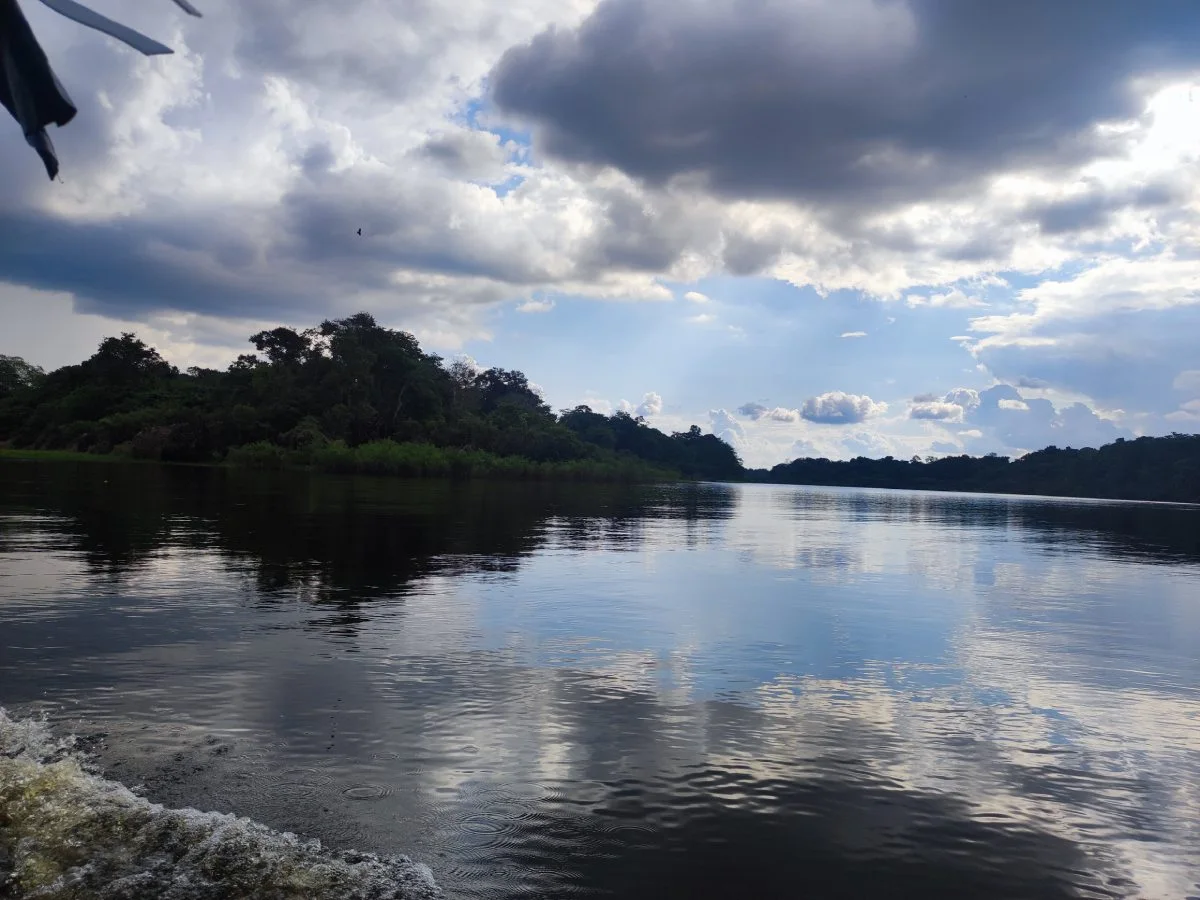
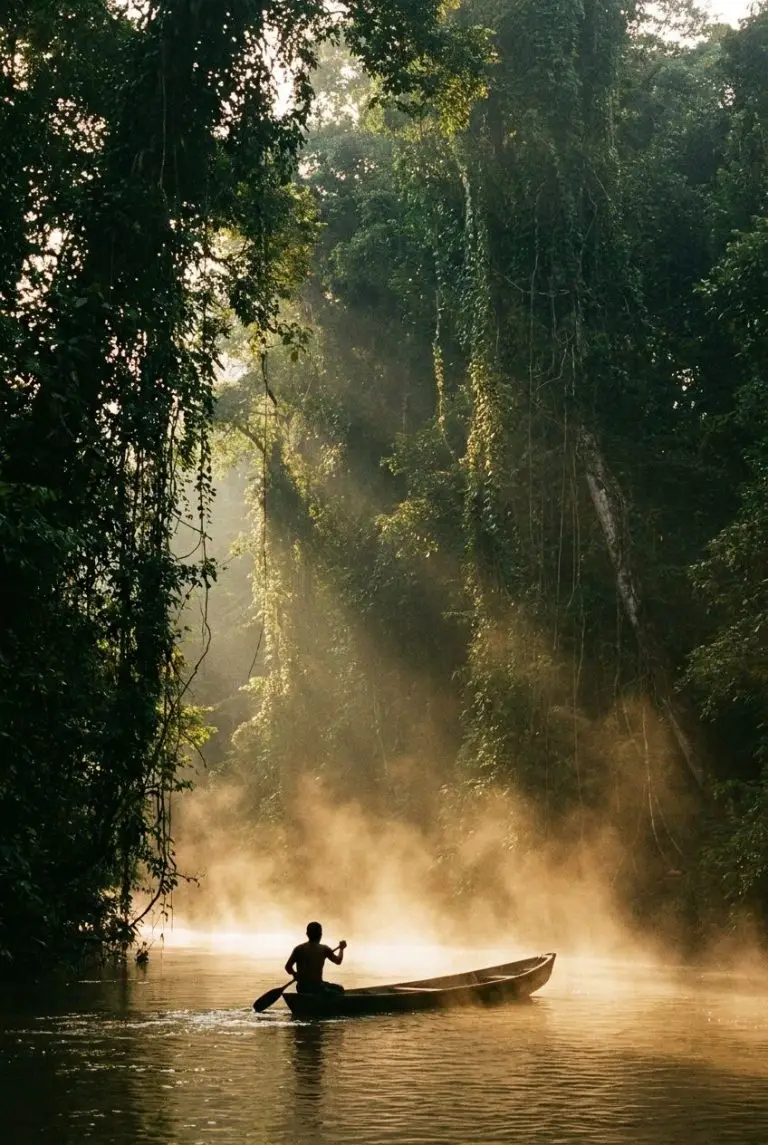
We enter villages home to tribes that have lived there for centuries. We stay where the locals live. We get around in wooden boats or with easy hikes. The trip to the Amazon isn’t just contact with nature. We live inside it. Small moments you’ll remember for the rest of your life: a prayer before entering the jungle, a football match on a dirt patch for a pitch, a sunset on a boat in the company of dolphins in the middle of the jungle.
Trip to the Amazon: why it’s worth living
The Amazon rainforest stretches across nine countries. We set foot on Colombia’s edge of it. Leticia touches Peru and Brazil. It’s a tri-border crossroads. From here, river routes open up towards countless villages and tribes of the Amazon. To get around, you’ll be hopping in and out of small boats, passing through channels, lakes, little islands and small communities. On foot you can reach Tabatinga in Brazil and change country as if crossing into the next neighbourhood.
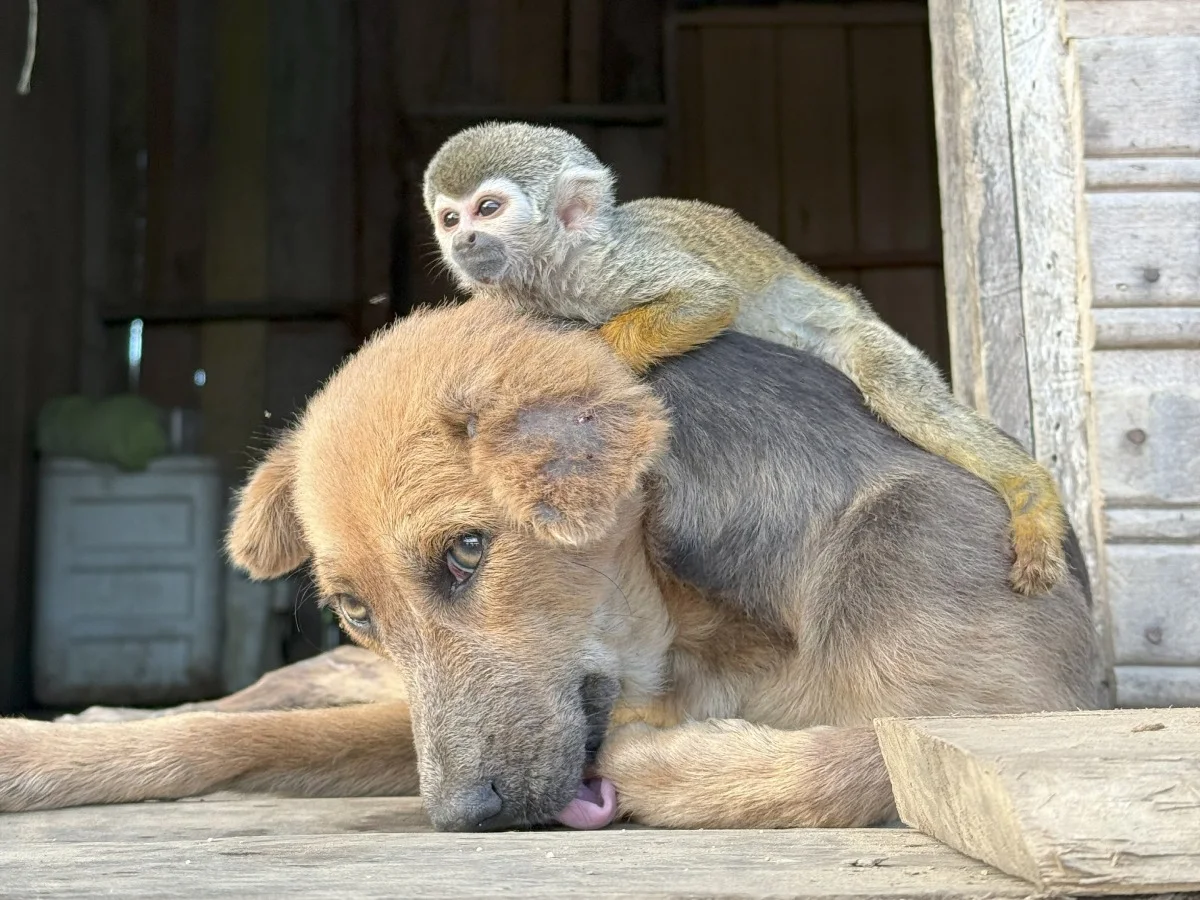
On the trip to the Amazon you see the locals’ everyday life, hear their stories, and feel the river setting the schedule. The animals roam free around you. The routes are short but full. Each day adds a chapter: boats, forest, communities, animals in their natural habitat. Here you don’t just “pass through”. You live the Amazon from the inside, and that is the whole point of this trip.
What you’ll experience on the trip to the Amazon
Leticia: The gateway to the jungle
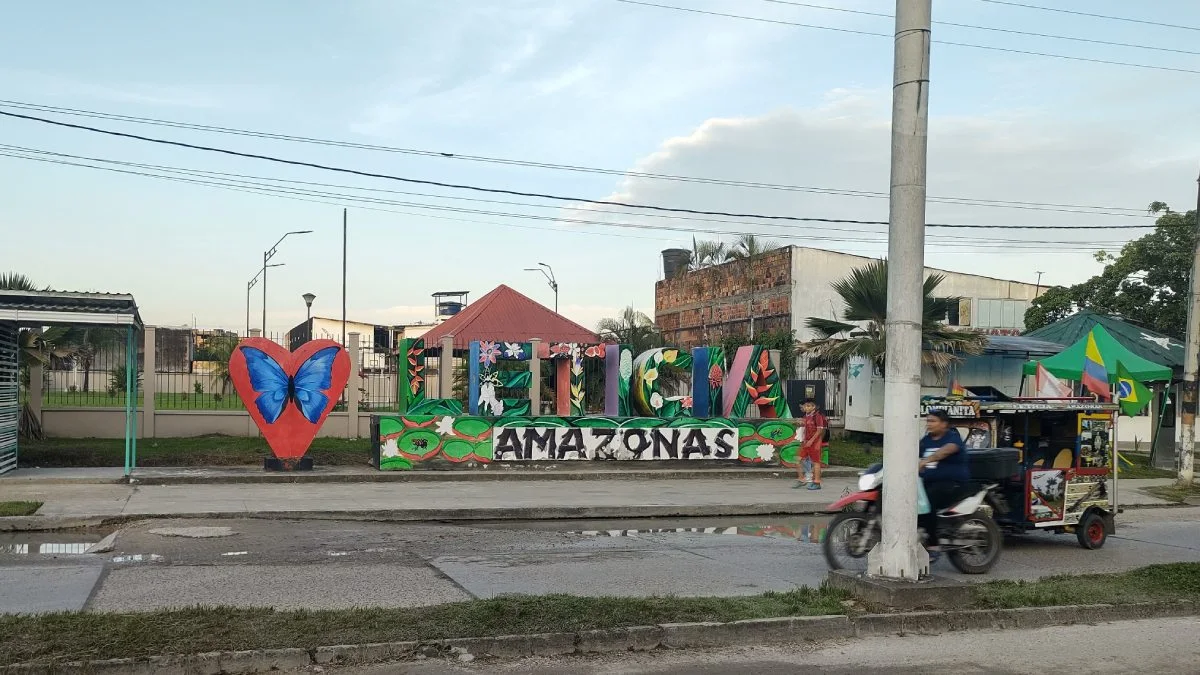
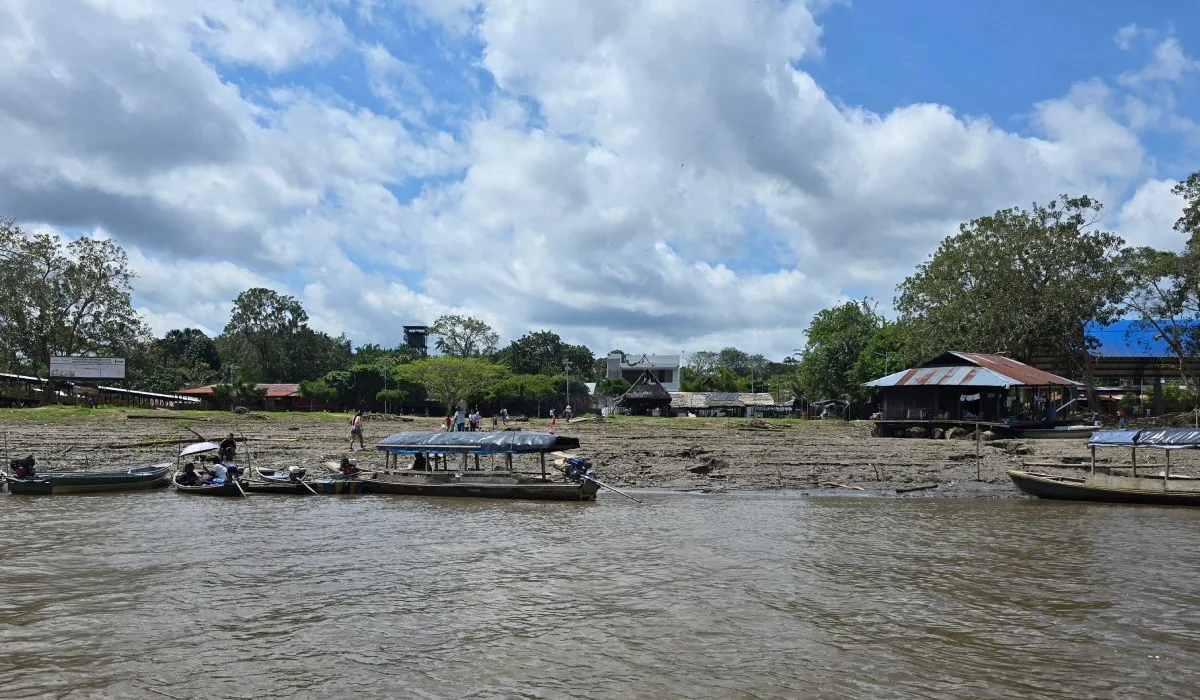
We land in Leticia, at Colombia’s tri-border point. The humidity is the first welcome. It’s the last city in Colombia before the absolute jungle begins. Once we arrive, 2-3 hours are enough for a first stroll around the market. Just enough to buy whatever we’re missing and tune into the new environment. Bottled water, mosquito repellent, sunscreen and a few packaged foods. This is where the trip to the Amazon begins. We head down to the river and, the moment we step into our boat, the city stays behind. Ahead of us lie the river and the unexplored.

Most flights to Leticia go via Bogotá. If you want the urban start of our journey, see our guide to Bogotá for ideas before the jungle.
On the riverbanks: life in a jungle community
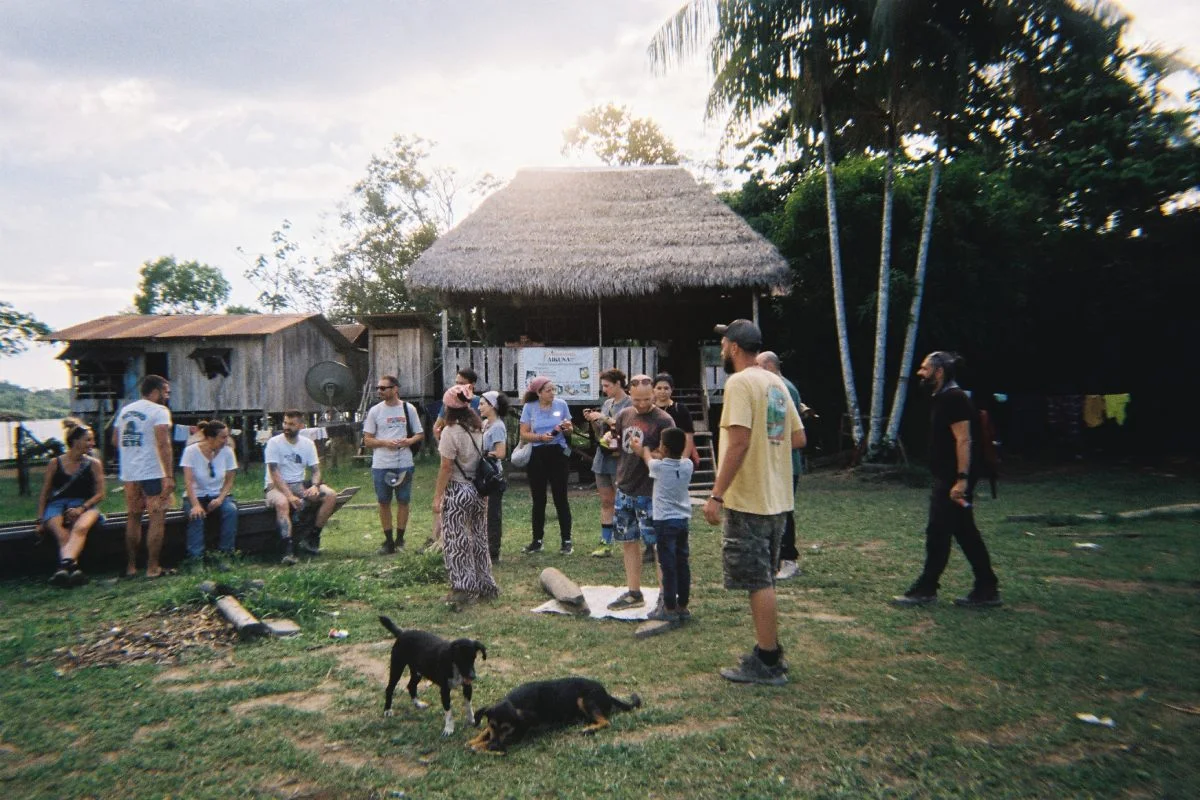
The boat leads us to a small village on the banks of the Amazon. We don’t stay in a hotel; we stay where the people live. We drop our things, the locals greet us, we walk around the village. Every afternoon the whole village gathers at the dirt pitch for football. First the women of every age play, then the men and the boys. Some in shoes, some barefoot or in socks only. The pitch, apart from the two goals, has potholes, usually mud too, but the smiles are never missing. That’s where you understand what really matters. Before the night hike, our guide whispers a prayer in his mother tongue, a habit from the days he entered the jungle as a child with his father. The electricity runs for just a few hours. We charge up when we need to and put the phones away. Here, silence has sounds: leaves, insects, the footsteps of monkeys on the metal roofs as they pass. On this trip to the Amazon we remain visitors. We have come to nature’s home.

We deliberately don’t mention the names of the communities, out of respect for their rhythm and their privacy.
Wooden huts & Puerto Nariño
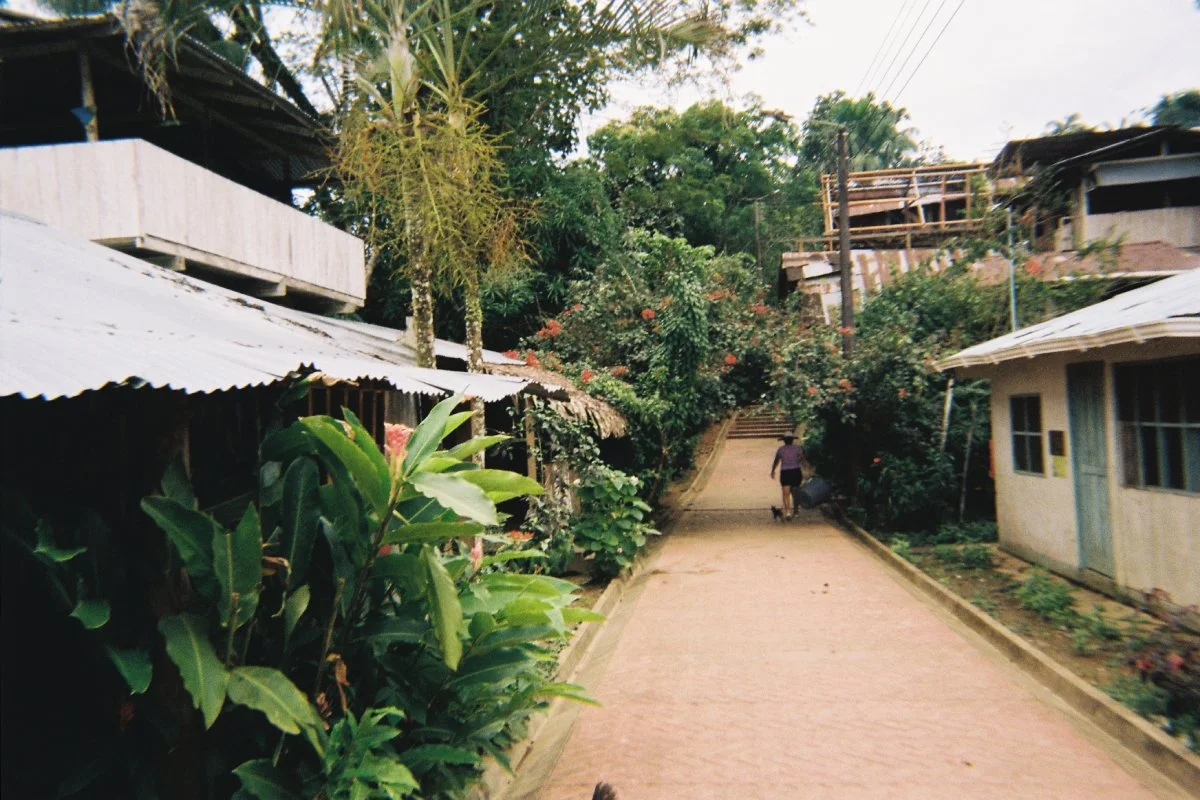
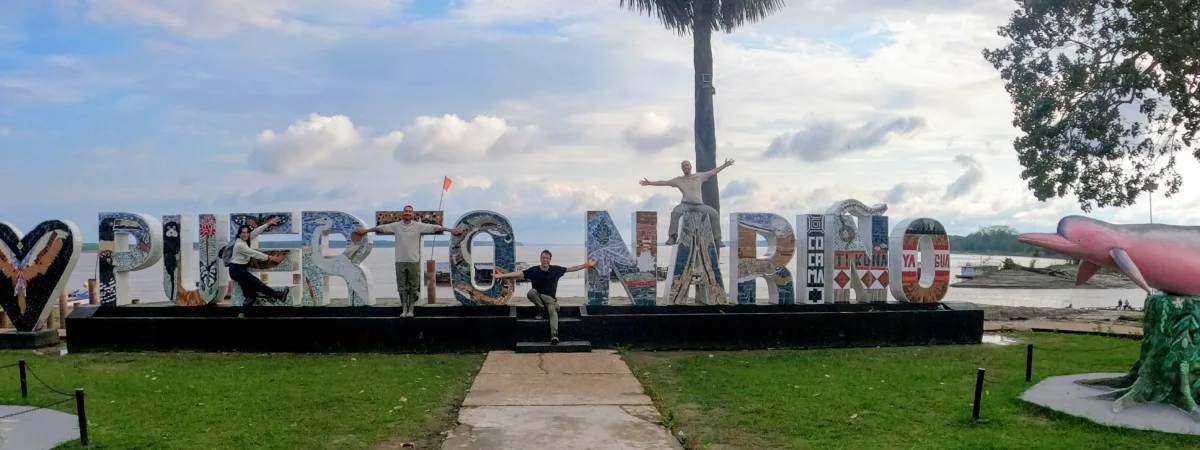
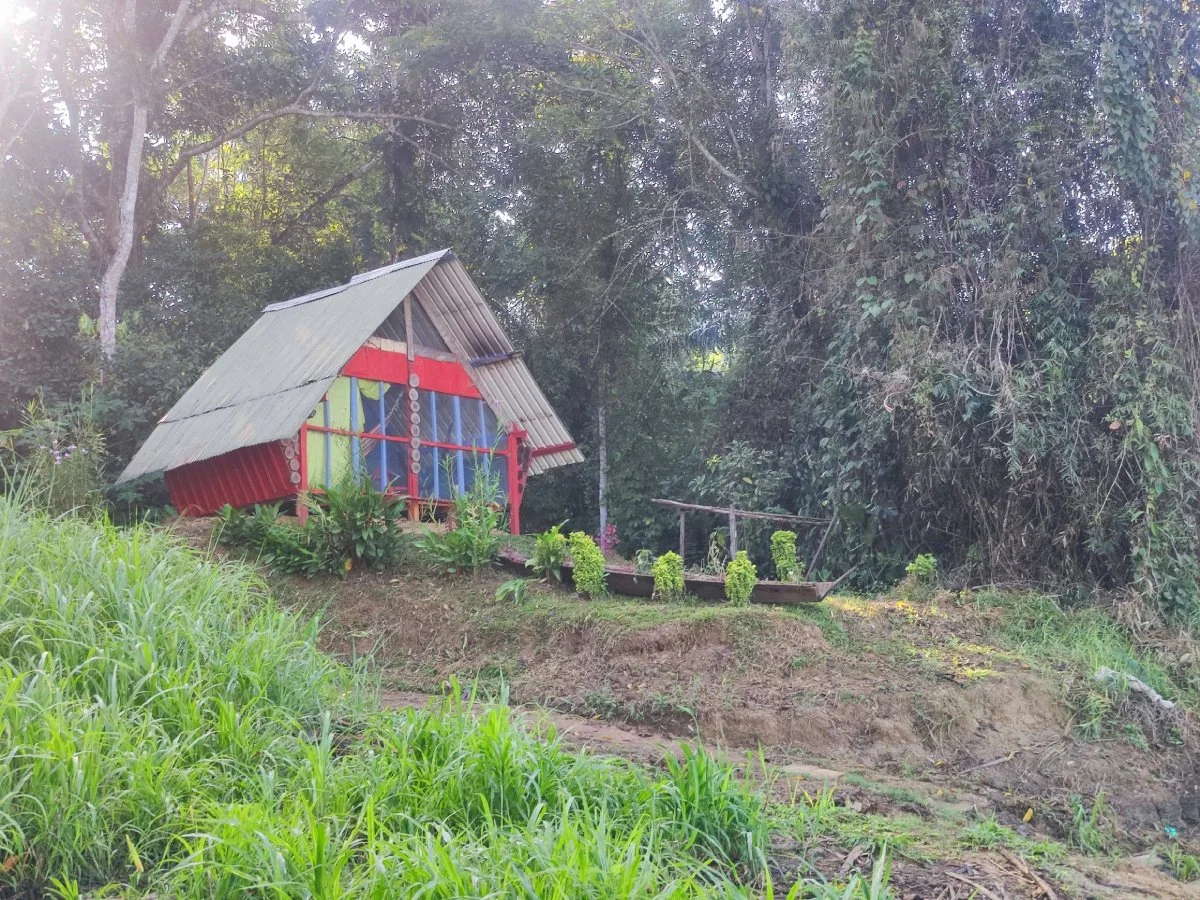
We continue our exploration. We head down the river by boat. We reach small wooden houses on the bank, inside the forest. Parrots high in the trees that will soon come close to us, monkeys passing by like neighbours. A little further on lies Puerto Nariño; we walk it, wander through its little streets, do a bit of shopping and make a short stop for a beer. After all, Puerto Nariño is one of the quietest and most ecological villages in Colombia: there are no cars. Everything happens on foot, and life here flows at a different pace.
The kitchen is communal, but the cooking is best left to our hosts. Amazon fish wrapped in banana leaves, chicken, eggs, cassava, bananas, papaya and pineapple. Simple recipes, delicious flavours. Everything we eat comes from around us, a breath away. We sit at little wooden tables and share plates, conversations and stories. There are no price lists or “packages”; there is their everyday life, and us alongside it.
When the light fades, we head out with a guide for a night hike. Tarantulas near the roots, sounds that only wake in the dark, animals’ eyes glinting in the torchlight among the foliage. Nothing is staged for us; whatever we experience happens anyway. That’s what makes the trip to the Amazon real. We are not customers, we are guests.
Our boat journey continues into Peru
We cross into Peru by boat. With us comes our local friend from the village, he has his son in the boat too, just as his own father did with him. In the boat we cross channels, travelling through forests that touch the banks. Our local friend points out signs in the water, talks about currents, hiding places and legends. We reach a river village and sit with the community. With a short walk we come across lakes with giant water lilies. Here you don’t look for “sights”. You let the place speak to you.

We look for sloths in the branches. We observe birds and plants, we listen to stories about the river and its creatures. The words flow like water: little legends, explanations, gestures. It’s an encounter, not a performance.
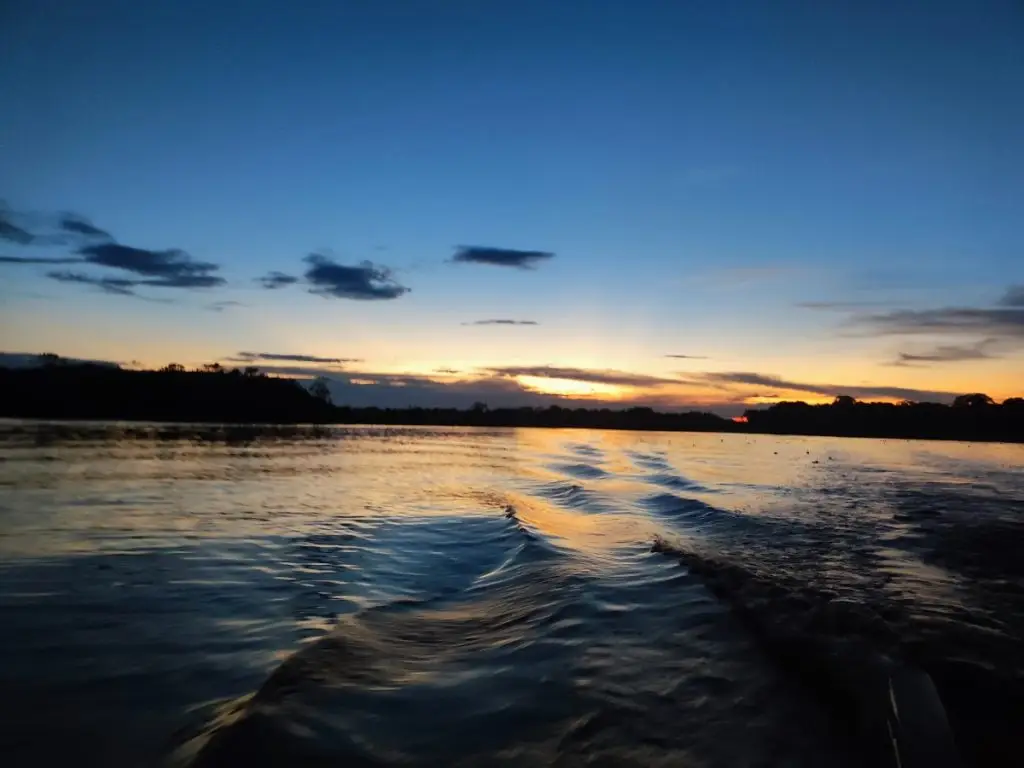
In the afternoon we return to our lodgings, the little wooden houses. On the bank, dogs and monkeys are waiting for us, some watch us, others come to play with us. And then comes the sunset over the Amazon: the sky paints the river orange and the colours mirror on the water. Nobody is in a hurry. We stay silent. This is a trip to the Amazon the way we want it: slow, real and alive.

Pink dolphins & Lake Tarapoto
We talk, we laugh, we swap seats in the boat. Suddenly we cut every sound we were making. We lower our voices. Beside us a pink dolphin surfaces for a breath, the water opens quietly, and then it dives again. We keep quiet so as not to frighten it. We wait to see it again, or for others to appear. You don’t chase them; you let them come. In small appearances like these you feel just how alive the Amazon is.
At Lake Tarapoto the light softens and the mist sits low. Birds pass noiselessly, the green swallows the horizon. The waters mirror sky and foliage, and the sounds come from deep within. Droplets, leaves, distant animal calls. We put the cameras down. We watch, we listen, we stay. This is the essence of the trip to the Amazon: to be present, to respect the place. We hold on to the moment and move on.

Back to Leticia, a breath of city in the middle of the jungle
In Leticia the rhythm changes without the jungle disappearing. Streets, motorbikes, small shops. The phone signal returns, clothes dry faster, and yet the air stays thick with humidity. We have access to all sorts of goods, we take a long shower and remember what a luxury the simple things are. The parrots can still be heard above the rooftops, the city lives inside the forest, not next to it.
A little further down is Tabatinga, Brazil. You walk a few minutes on foot and change country. A different language, different colours in the shops, the same temperature. We take a quiet stroll and head back for food, souvenirs and conversation. If you want to continue your route through Colombia, check out our guide to Medellín too, the perfect next stop after the Amazon.
Practical information & FAQs for the trip to the Amazon
Flights & arrival: how do I get to Leticia?
Athens → Madrid: about 3,5–4 hours (often direct).
Madrid → Bogotá: about 10–10,5 hours (direct).
Bogotá → Leticia: about 2 hours.
When should I go?
Tropical climate, hot all year round (~25–32°C). The rainiest months are February: April (high waters, more channels). A “drier” feel from July: September (easier hikes). August and February are popular, each with a beauty of its own.
Are vaccines needed?
You can check the website of EODY (the Greek National Public Health Organization) or call your region’s Travel Medicine Services 4–6 weeks in advance. For the Amazon, the yellow fever vaccine is recommended at least 10 days before, along with carrying the International Certificate of Vaccination (the “yellow booklet”). At times it is even mandatory. Talk to a doctor about malaria prophylaxis and any vaccines (e.g. tetanus, hepatitis A/B, typhoid).
What should I bring with me?
Light, quick-drying clothes, long trousers for the night, a raincoat, hat, sunscreen, mosquito repellent, a head torch, a water bottle, closed shoes you don’t mind getting dirty.
Can I buy things on the spot?
Yes. In Leticia and Puerto Nariño you’ll find the basics (mosquito repellents, water, snacks, fruit).
Trip difficulty
Moderate. Humidity, heat, boats, dirt trails. Medical facilities aren’t right next door, we go at a steady pace, with care and organisation.
Water, what do we drink?
The lodgings provide bottled water from large bottles so you can refill your own. You can also buy individual bottles.

Water in the bathroom
It comes from the river and is brown in colour. It’s fine for showering; face and teeth with bottled water.
Food, what do we eat?
In the cities, plenty of choices. On the riverbanks, our hosts often take over: Amazon fish wrapped in banana leaves, chicken, fried eggs or omelette, rice, fried plantain (a different variety of banana), cassava flour, bananas, papaya, pineapple, mango. Simple, clean flavours, all from right beside us.
Electricity & signal: what to expect
In several communities the electricity runs for only a few hours a day. Charge up when you can. The signal is patchy, part of the experience.
The Altervan experience
We don’t tick boxes on lists. We step inside. Into the dirt patches, the communities, the wooden houses, the earthen pitch where the whole village plays. We cook simply, eat together, share stories. In the boat we laugh, take photos, make a racket, but we fall silent instantly when pink dolphins pass beside us. Before entering the forest, a prayer in their mother tongue, a small ritual, a deep breath, an unforgettable experience.
Here we are not tourists. We are visitors and guests. There are people meeting people. And that changes things inside you. You see children playing barefoot and laughing, people who live simply and share willingly. You slow down. You find joy in little things. Your mind reboots. You understand once again where happiness lies, in the basics, in what we share, in being together. That is the trip to the Amazon: real, alive, human.
Live it with us
Leave the city behind for a while. Come and experience the Amazon up close. With people who become your crew. With moments that don’t fit into stories.
Live it to the fullest with Altervan. You’ll hear sounds you’ve never heard before, see animals in their natural habitat and the most vivid side of nature moving all around you. You’ll taste food made from the community’s own ingredients. Boats, wooden houses, football on the dirt pitch, parrots, monkeys, pink dolphins that appear when you’re not chasing them. You eat simply, laugh a lot, fall asleep to the sounds of the jungle. You come back calmer, fuller.
Come with us on an adventure that will shake you out of your comfort zone in the most beautiful way. See dates, itinerary and availability here: Altervan Colombia Soultrip
Small group. Few seats. Big smiles.
With love for travel, roadtrips and adventure.
The Altervan team
https://www.instagram.com/p/DGsTm8rMb6w/?igsh=MW4zb3FyNWttZjgzcg==