Two days before departure, the same old scene: you spread your clothes out on the sofa, you make some “final additions” (meaning… one more hoodie in the suitcase, just to be safe). And somewhere around there comes the big question:
“Should I take the big suitcase?”
Or the other one, the winter classic: “There’s no way the thick stuff will fit.”
And yes, most of the time you’re entitled to a bigger bag. But especially on a roadtrip, with lots of moving around, with vans/cars or small accommodation, the “big one” isn’t a solution. It’s extra weight. In space, in time, in stress.
The goal isn’t to cram everything in.
The goal is to take the right things. That way, your suitcase will close easily and you’ll travel relaxed. Not weighed down.
Why the big suitcase won’t work for you (on a roadtrip)
If it were a “stay in the same hotel and go for walks” kind of trip, maybe it would be fine.
But on a roadtrip things change:
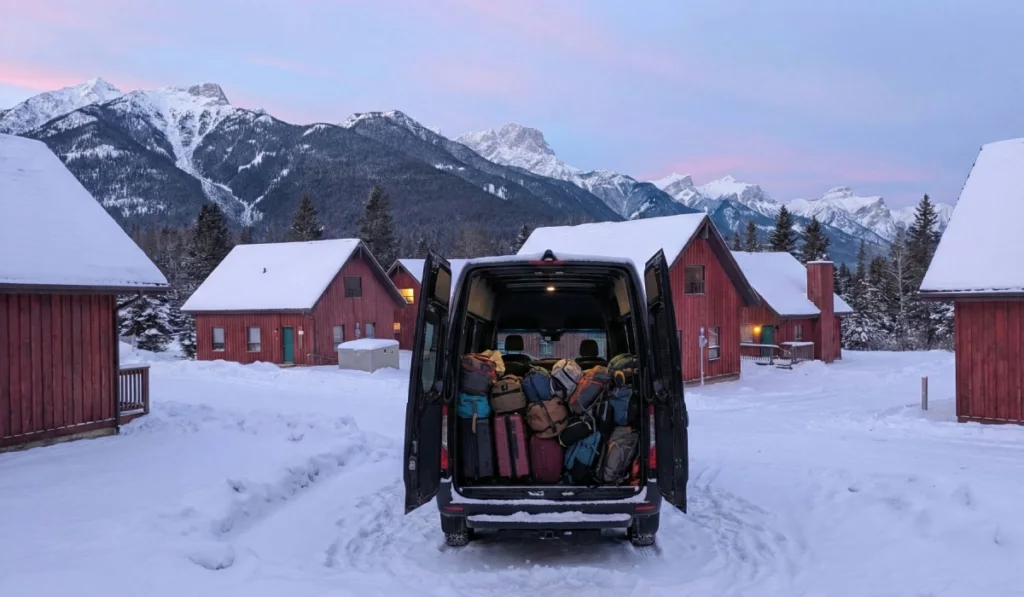
- Space in vans/cars. When there are a lot of us, space isn’t infinite. Small bag = everything fits. That way, you find everything more easily and you travel more carefree.
- Stairs, stops, small accommodation. The suitcase dragged along pavements and alleyways only sounds nice in the movies.
- Less stress, faster transfers. You zip it up, lift it, load it, go. No need to play “Tetris” every time you change location.

In other words: a small bag isn’t a limitation. It’s a convenience.
And yes, it can be done. As long as you start off right.
3 rules to make everything fit (no magic required)
1) You don’t take “more”, you take “the right things”
The first trick is to cut out the “maybes”.
- No “what if we go somewhere fancy?” (we’re not going to La Scala in Milan)
- No “what if I get cold?” (that’s what layers are for, more on that below)
- No “what if I want 3 options for the same day?”
Take clothes you actually wear, that make you feel comfortable, and that don’t need special treatment. The trip isn’t a catwalk. It’s an experience.
Tip: If you keep a piece of clothing “for best” and think “I’d better not ruin/stain it”, leave it at home. You’ll be carrying it around for nothing.
2) Few pieces, many combinations
This is where the whole trick lies.
Pick 2–3 colours (neutrals + one colour that’s “yours”) and build around them.
The aim is for every top to “click” with every bottom. In short, few pieces, many combinations.
That way:
- you cut down your options without getting bored,
- you don’t carry “orphan” pieces,
- and you get dressed easily even when you’re up at 07:00.
Small rule: If a piece doesn’t work in 2–3 combinations, leave it out.
3) No “just in case”
The “just in case” mindset is the number 1 reason the suitcase fills up and won’t close.
After all, most “what ifs” never happen. And this is where that phrase fits perfectly. “We’re tired of stressing about things that have never actually happened to us.”
So instead of packing things for every possible scenario, simply take pieces that work for you in more than one situation.
- one good windbreaker/rain jacket instead of a second coat,
- dressing in layers instead of one “enormous” overcoat,
- a second pair of shoes you’ll actually wear, not “maybe”.
And one more thing: when you travel in a group, you don’t need to have everything on your own. The essentials, yes. The “what ifs”, no.
7–9 days with a cabin suitcase (and how to stretch it to 12)
The idea is simple: you don’t take clothes for 9 different days. You take a few that combine and you “rotate” them.
For 7–9 days: what to take (the core kit)
- 4–5 t-shirts/tops (depending on the season)
- 2–3 trousers/bottoms
- 1 warm layer (a hoodie or a fleece)
- 1 windbreaker/rain jacket (a lifesaver on a roadtrip)
- underwear/socks for the days (or +2 if you want extra comfort)
- shoes: 1 pair you wear, plus 1 in the suitcase (if you really need it)
⚡Small rule: if something doesn’t go with the rest, it stays out.
For 10–12 days: the trick (no second suitcase)
Here you don’t scale up the clothes. You scale up the organisation.
- Plan on washing 2–3 basics (t-shirts/underwear) somewhere around the middle (day 5–6).
- Prefer clothes that dry quickly.
- Avoid heavy things that hold water and take ages to dry. Like very heavy jeans or hoodies.
If you don’t want to wash anything, that works too. It’s just that the suitcase will fill up more easily that way.
How to pack it properly: 5 moves that make a difference

1) Pack in “groups”
Instead of throwing everything in together, use packing cubes:
- one cube for t-shirts
- one cube for trousers
- one cube for underwear/socks
That way you’re not digging around every day, and the suitcase doesn’t fall apart by day two.
2) Wear the heavy stuff while travelling
Jacket, hoodie, chunky shoes: wear them when you travel.
The suitcase will “breathe” instantly.
3) All cables/chargers together
Put chargers, cables, powerbank in one small pouch/organiser.
So you’re not hunting for “where’s the cable” at the exact moment you need to leave.
4) Fill the gaps cleverly
- socks inside the shoes
- small items in the corners
- anything fragile goes in the middle so it doesn’t break
5) Do the final test
Close the suitcase, lift it, and just to be safe, weigh it at home.
If it feels like a “brick”, something’s got to go.
Summer / spring-autumn: the easiest setup
Here things are simple: a few things, lightweight, and one good “outer layer” for wind/rain.
An honest core list:
- 4–6 t-shirts
- 2 lightweight trousers (or 1 pair of trousers + 1 pair of shorts)
- 1 thin hoodie or cardigan (for evenings/wind)
- 1 light windbreaker/rain jacket
- 1 swimsuit (if it fits the trip)
- underwear/socks
- 1 pair of “walking/strolling” shoes (and, if needed, 1 lighter second pair)
☝️ Keep this in mind: If in doubt, choose clothes that dry quickly. They’ll make your life so much easier.
Winter: you don’t need more clothes, you need layers (and to stay dry) ❄️
The classic mistake is “I’ll take thicker stuff”. And then the suitcase turns into a brick or simply won’t close.
The right approach is to dress in layers. In other words, like an “onion”, so you can add/remove depending on the weather.
The simple recipe (3 layers)
- 1st layer (inner): thermal/thin top/leggings that keep the warmth in
- 2nd layer (middle): hoodie or fleece
- 3rd layer (outer): windbreaker/rain jacket (ideally one that “blocks” wind and water) ️️
What makes the difference without taking up space
- gloves + beanie + neck warmer (small, but they change the whole game)
- waterproof shoes (if there’s rain/mud, you’ll appreciate them)
- an “emergency” waterproof (a thin poncho or packable one), if you don’t have a good rain jacket
Tip: The “heaviest” items (jacket, chunky shoes) travel best on you. Not inside the suitcase.
Personal item: the small bag that saves the day
You usually get the option of a small bag/backpack that fits under the seat. That’s where all the comfort hides. Not because “you take more”. But because you have the important things on you and organised. It’s your “second boot space”.
What goes in it (and you’re done):
- documents/wallet/keys. Tickets, passports and everything you’ll need for check-in and security checks. All gathered in one internal pocket to save you time.
- Phone + Charger + earphones + Powerbank: Ideally inside a small pouch or a separate case. That way you’ll find them easily.
- Personal items: Anything of vital importance always stays with you, not in the suitcase.
- 1 “SOS” change of clothes: A t-shirt and a set of underwear. It’s the one “just in case” that actually happens. E.g. a delay or a coffee spilled all over you.
- Liquids (100ml): All your liquids in small containers, gathered in a clear bag so you get through airport security in seconds.
- Snacks + An empty water bottle/flask: Fill it up after security and skip the unnecessary expense.
Small rule: anything that would annoy you if you had to search for it for 10 minutes goes in the personal item.
Backpacking mode: here the suitcase isn’t the answer, the backpack is
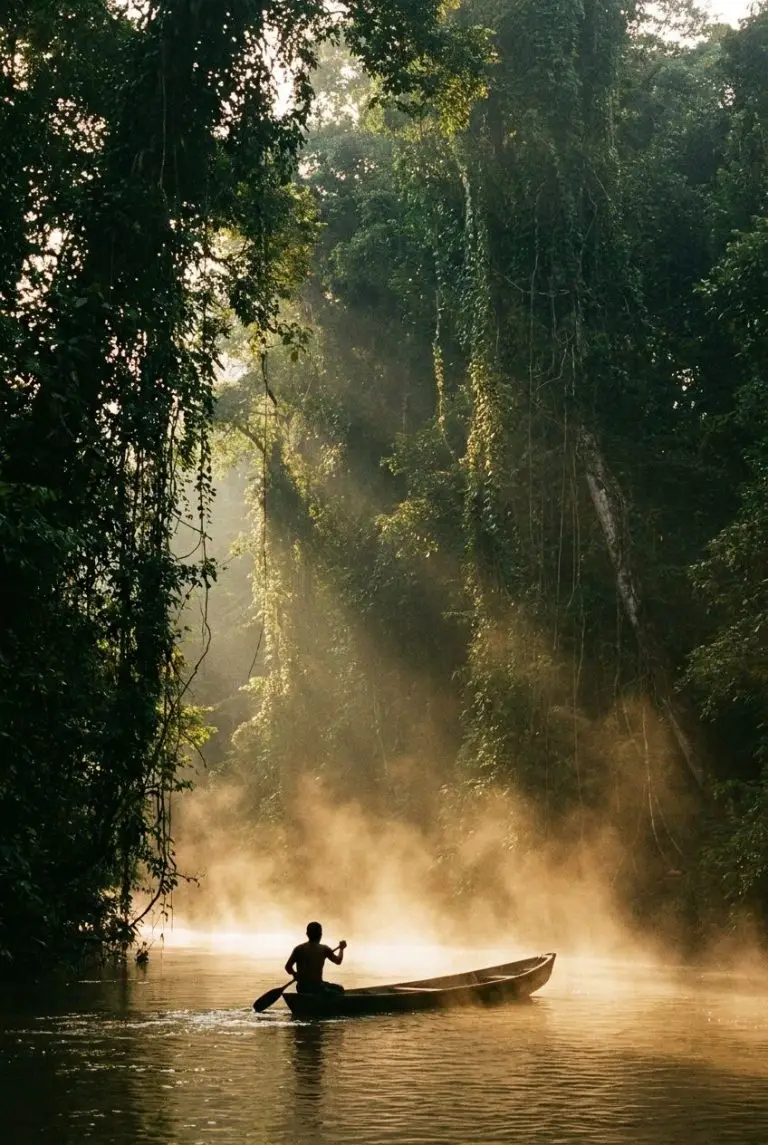
On a trip like “12 days in Colombia” (cities + jungle + boats + dirt trails + small accommodation), a wheeled suitcase doesn’t help you. It slows you down, tires you out, and ultimately makes you feel like you’re carrying something that’s working… against you.
There, the right recipe is:
- One backpack (your main bag).
- And a small bag/daypack (for your everyday things and valuables).
You don’t want to “fit everything in”. You want to be agile.
How to set it up so you don’t miss a thing:
- Take a few lightweight things that dry easily (quick-dry).
- Prefer long, lightweight trousers (great for heat, insects, vegetation).
- A windbreaker/rain jacket is more useful than a “second coat”.
- Shoes that can handle mud/water (you’ll appreciate them).
- And in general: anything you won’t wear/use doesn’t travel with you.
An “honest” list for a trip like this (not a wardrobe):
- 2 lightweight long trousers
- T-shirts (as many as make sense with 1 small mid-trip wash)
- Windbreaker/rain jacket
- A medium-sized towel. If you know it won’t be provided somewhere.
- A head torch. If you have one, if not, it’s not the end of the world.
- Shoes for mud/water
And what if your backpack seems “big”?
Here’s the secret: A 35–45 litre backpack usually passes comfortably as a carry-on, as long as you don’t overstuff it until it’s “bursting at the seams”.
Why choose it:
- You save time. No waiting at the baggage carousel.
- You have peace of mind. Your bag is always with you, no fear of it being sent to another country.
- You’re the first one out. You grab your bag and head straight to the van for the adventure to begin.
The goal is one: To have everything on you, move around comfortably and let nothing hold you back.
The 2-minute final check (and off we go!) ✅
Before you close it and say “we’re good”, do one last pass:
- Passport / ID / Tickets: Check again. Are they there? If those are in place, everything else can be sorted.
- The suitcase closes easily, without you having to wrestle with it or climb on top of it.
- You can lift it easily and it doesn’t feel like carrying a brick.
- All cables/chargers gathered in one pouch.
- The windbreaker/rain jacket is in there (because the weather on a trip doesn’t ask first).
- You’ve left some space for the return. You’ll pick something up. You always pick something up.
If you tick these off, you’re fully ready. Not “ready to lug it around”. Ready to live the trip.
The essence of the adventure
Why do we do all this? The trip isn’t won by the person who brought the most stuff.
It’s won by the one who moves comfortably, changes location easily, and keeps their mind out there not inside the suitcase.
A small bag doesn’t deprive you of anything. It gives you freedom.
And yes, with a little organisation, you won’t miss a thing.
Save room for experiences, not things.
With love for travel, roadtrips and adventure.
The Altervan team