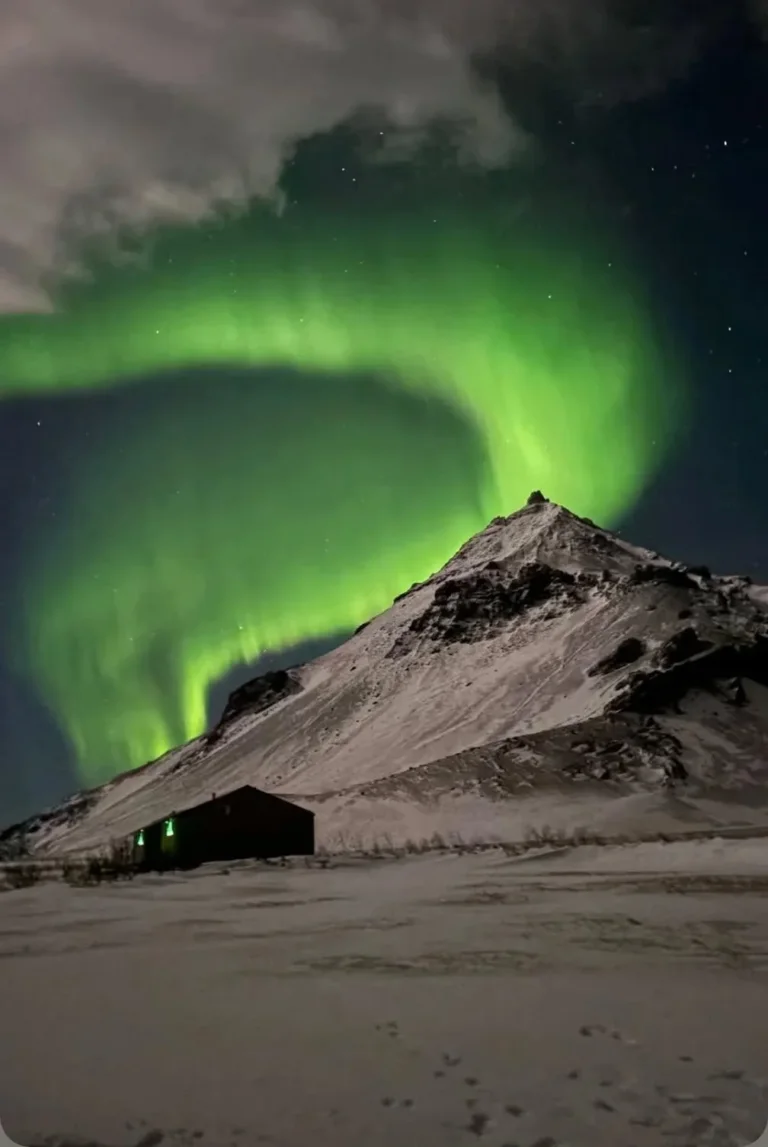
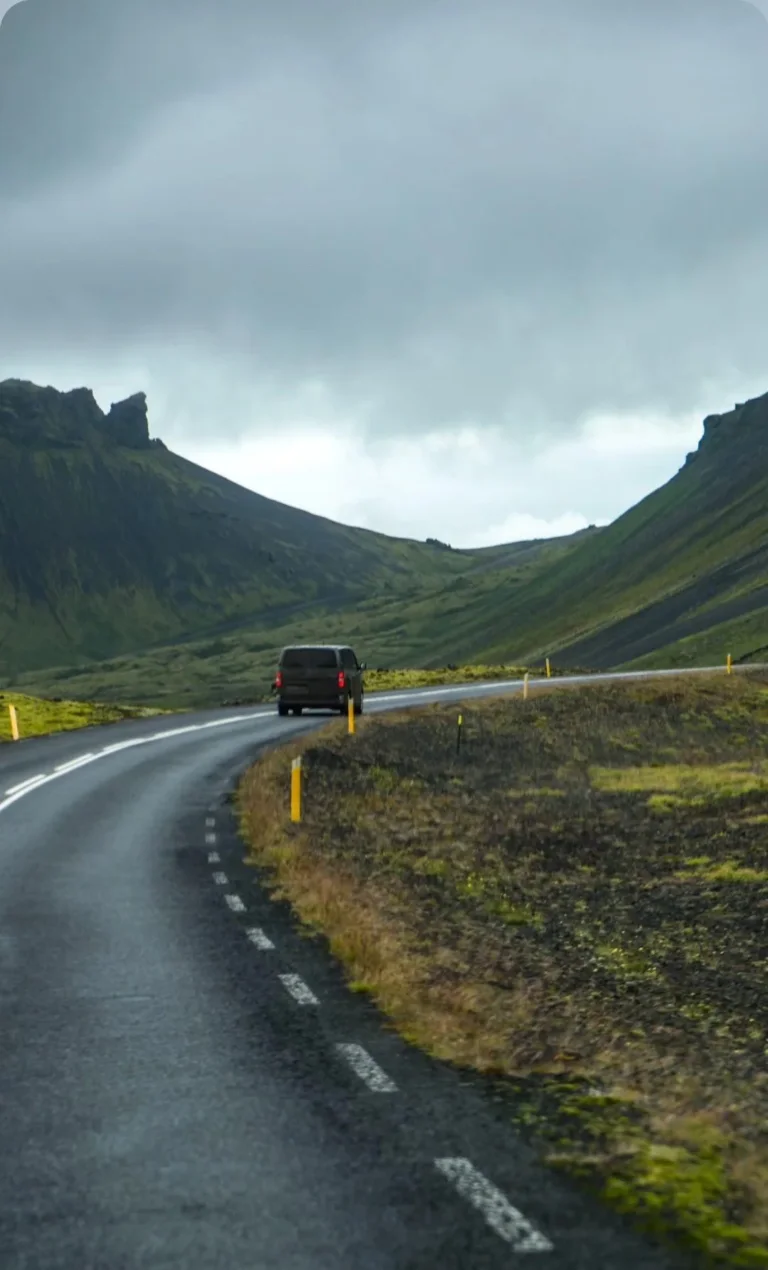
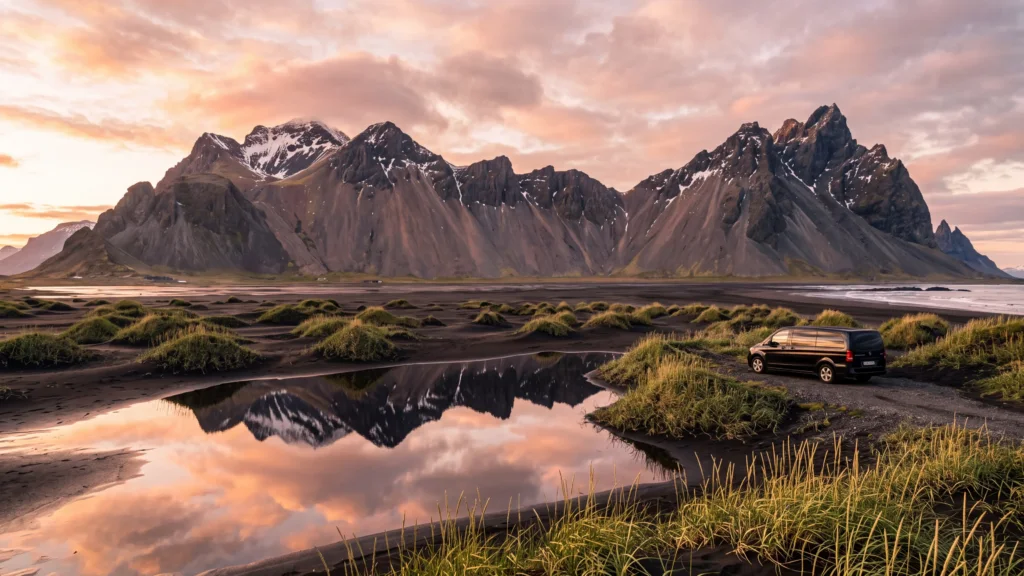
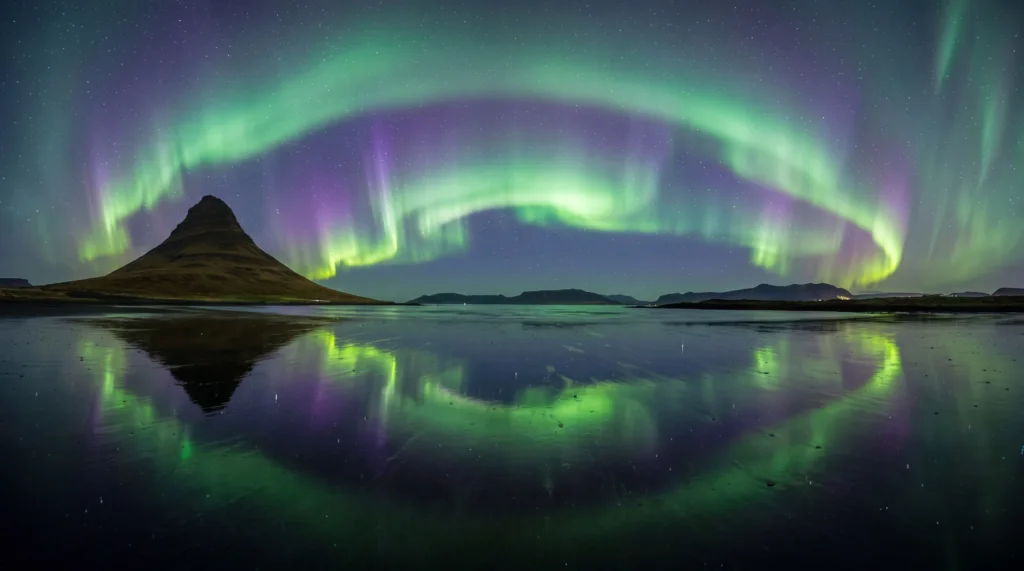
An Iceland road trip is one of those journeys that rearranges what you thought a landscape could be: black volcanic deserts, glaciers calving into still lagoons, waterfalls you hear before you see, and a sky that, in the right season, catches fire with the northern lights. The best way to live it is at your own pace, with the freedom of the road, and that’s exactly what an Iceland road trip gives you.
Below is what makes it special, the highlights you shouldn’t miss, the best time to go, and how to do it the easy way with a van and a crew.
Why do an Iceland road trip
Iceland is small enough to drive but wild enough to feel endless. A single day can take you from a geothermal valley steaming under your feet to a glacier, a waterfall and a black-sand beach. There are no crowds once you leave the main sights, the roads are scenic and well kept, and every bend hands you a new scene. Doing it as a road trip means you stop where you want, chase the light, and reach the corners that tour buses never see.
The highlights of an Iceland road trip
- The Golden Circle the classic trio of Þingvellir National Park (where two tectonic plates pull apart), the erupting Geysir hot springs and the thundering Gullfoss waterfall.
- Jökulsárlón glacier lagoon icebergs drifting on still water, with the nearby Diamond Beach where ice glitters on black sand. An experience like nothing else.
- Volcanic fields & hot springs lava deserts, steaming geothermal areas and natural hot pools where you soak with snow on the peaks around you.
- The South Coast the waterfalls Seljalandsfoss and Skógafoss, the black-sand beach of Reynisfjara and glacier tongues you can walk to.
- Reykjavík a small, creative capital that blends modern design with the natural world, perfect to start or end the trip.
The best time for an Iceland road trip
It depends on what you’re chasing. Summer (June: August) brings the midnight sun, open roads and the easiest driving and hiking. Autumn and winter (late September: March) are northern-lights season, with fewer travellers and a moodier, snow-dusted Iceland, though days are short and weather changes fast. For the aurora you need dark, clear skies, so the colder months win; for long days outdoors, summer is unbeatable. (See our guide on how to see the northern lights in Iceland.)
What to know before you go
Dress in layers, a thermal base, a fleece or hoodie and a windproof, waterproof outer shell, because the weather can shift within an hour. Pack waterproof shoes, gloves, a hat and a swimsuit for the hot springs. Roads can be icy in winter, so respect conditions and check the forecast. Iceland is one of the safest countries in the world, but its real risks are natural, weather, surf and terrain, not crime, so plan with care. (More on this in our guide: is Iceland safe to travel?) For live conditions, the Icelandic alerts site SafeTravel.is is your friend.
The Altervan way
An Iceland road trip isn’t only the places you see, it’s the feeling of driving beside glaciers and volcanoes, soaking in a hot spring under a starry sky, and the songs in the van with a crew that started as strangers and ended as friends. You don’t need a rigid plan; you stop where it’s beautiful and let Iceland set the rhythm.
FAQ: Iceland road trip
Is winter safe for an Iceland road trip? Yes, with experienced drivers, the right vehicle and respect for the weather. Do I need special gear? Mainly good layers and waterproofs; everything else you can rent or buy locally. How long do I need? A focused trip can cover the south and the Golden Circle in about a week, while a full ring of the island wants a little more.
If you’re ready for the most authentic road trip of your life, see our next Iceland trips and come along.
With love for travel, road trips and adventure,
The Altervan team.