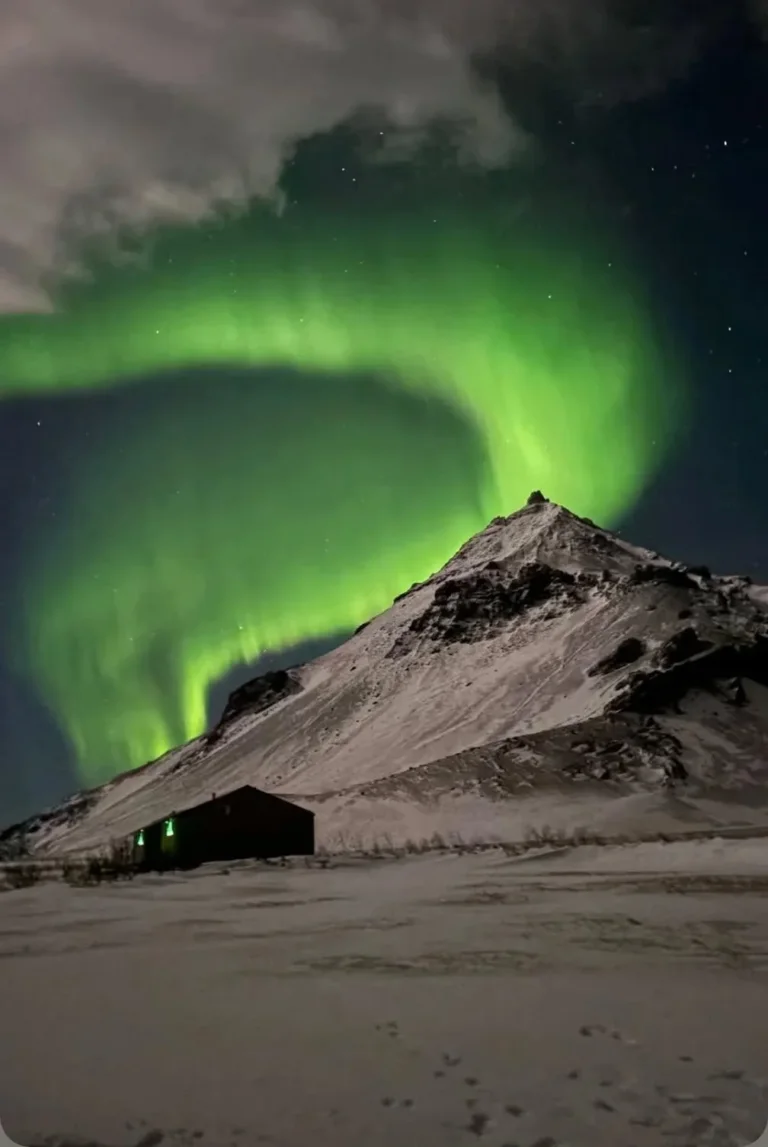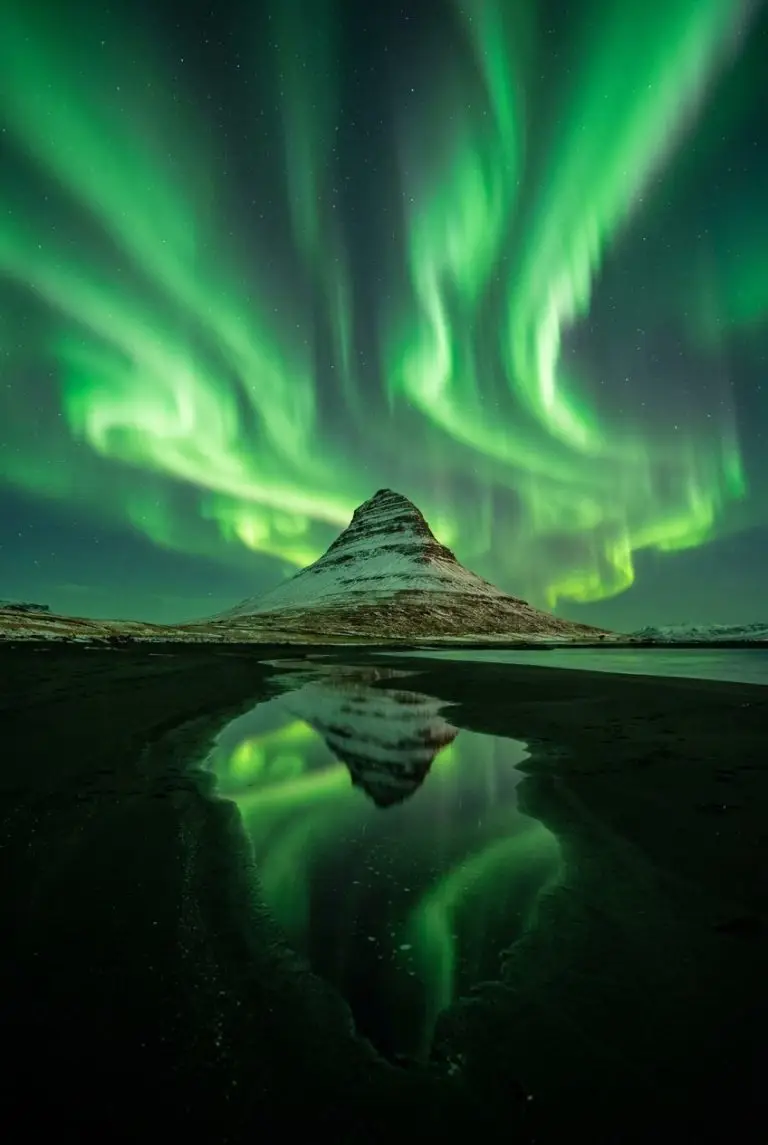
Few sights match the northern lights in Iceland — curtains of green, and sometimes red and violet, dancing across a dark winter sky. The aurora is unpredictable, but you can stack the odds heavily in your favour if you know when to go, where to look and how to read the forecast. Here’s how to actually catch the northern lights in Iceland.
What causes the northern lights
The aurora begins at the sun: charged particles from solar wind race toward Earth and collide with gases in our upper atmosphere, releasing light. Oxygen produces the familiar greens and reds; nitrogen adds blues and purples. The closer you are to the poles, the better your chances — which is exactly why Iceland is one of the best places on the planet to see them.
When to see the northern lights in Iceland
You need darkness, so the season runs roughly from late September to late March, when nights are long. The best hours are usually between 9pm and 2am. Summer’s midnight sun makes the aurora invisible, even when it’s active, so the colder months win. Give yourself several nights rather than one — the lights keep their own schedule.
Where to look
Get away from city light. Even a short drive out of Reykjavík into the dark countryside makes a huge difference, and a clear horizon to the north helps. Open spaces near lakes, coasts or lava fields are ideal — and a road trip is perfect for this, because you can chase the clear skies instead of waiting for them.
How to read the forecast
Two things matter: solar activity (the “KP index”, a 0–9 scale of how strong and far-reaching the aurora is) and cloud cover (clear skies are essential). Free apps like aurora forecasts, plus the Icelandic Met Office at en.vedur.is, show both the aurora strength and where the sky will be clear. A modest KP under a clear sky often beats a strong KP under clouds.
Tips to catch the show
- Be patient — dress warmly and be ready to wait, and to move if clouds roll in.
- Let your eyes adjust to the dark for 15–20 minutes; the aurora is often fainter to the eye than in photos.
- For photos, use a tripod, a wide lens, a few seconds of exposure and manual focus on infinity.
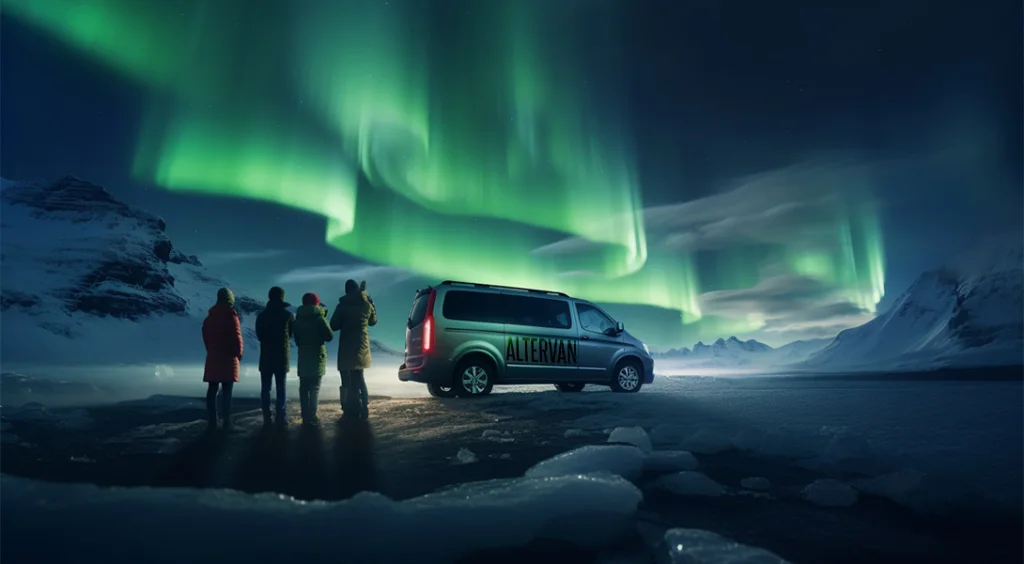
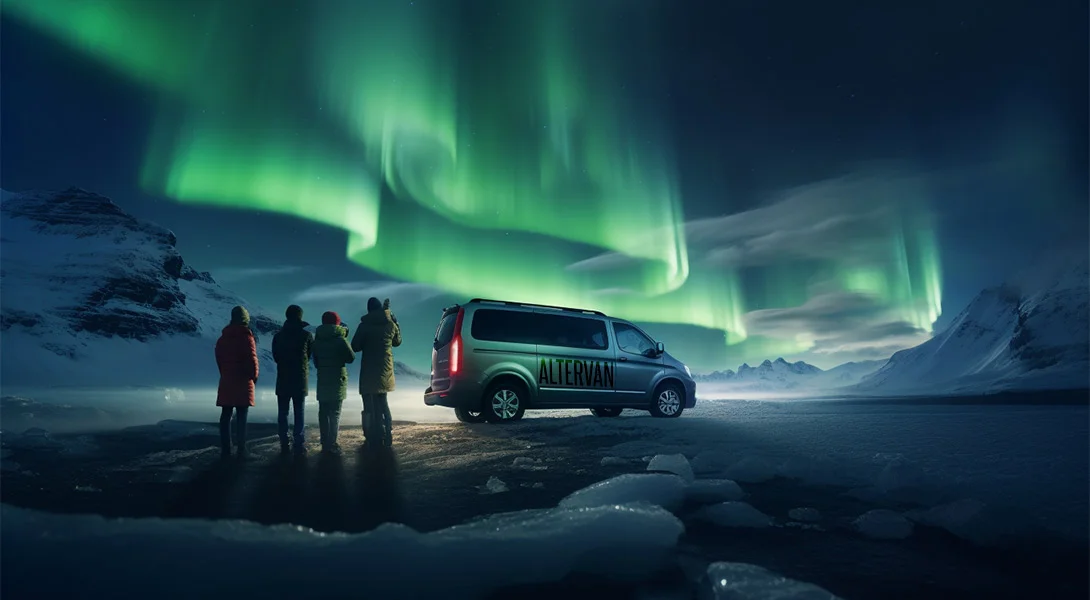
- Chase clear skies — with a van you can drive to the gap in the clouds.
See them with us
Standing in the cold and dark, then seeing the sky suddenly come alive, is one of those moments you remember forever — and it’s even better shared with a crew. (Planning the wider trip? See our Iceland road trip guide.) See our next Iceland trips and come chase the lights.
With love for travel, road trips and adventure,
The Altervan team.